
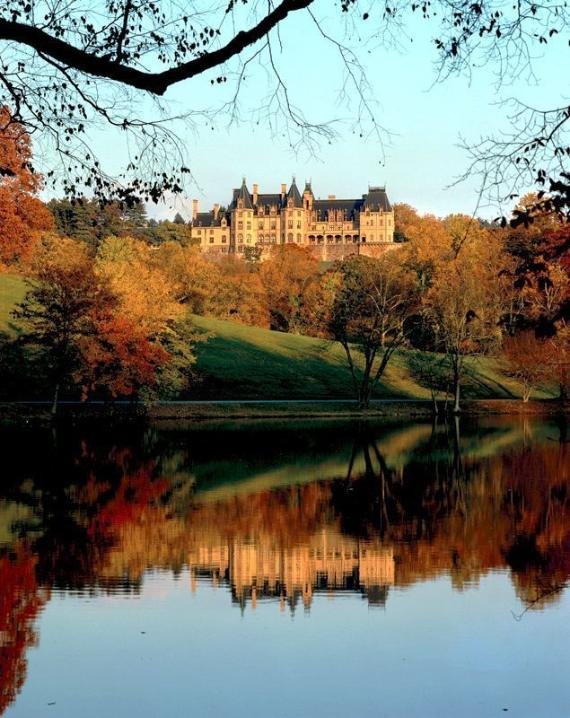
Asheville fall foliage has a reputation that precedes it — and for once, the reputation undersells the reality. The city sits at 2,134 feet in a broad river valley completely ringed by mountains. To the south, the Blue Ridge Parkway rises to 6,000 feet within 30 miles of downtown. To the north, Craggy Gardens and the Black Mountains frame the horizon. The French Broad River runs through the middle of it all. When October arrives, the color doesn’t just happen around Asheville — it happens to Asheville, descending from the surrounding ridges toward the valley floor in slow motion over the course of the entire month. There is almost no week in October when something isn’t at or approaching peak somewhere within an hour of the city.
What makes Asheville fall foliage genuinely extraordinary — and different from any other foliage destination in the East — is the combination of factors that almost never exist together. A major mountain city with world-class restaurants, breweries, and arts. Immediate access to one of the great scenic drives in North America. More tree species than all of northern Europe creating a color palette that shifts from red to gold to bronze in sequence. And an elevation range that extends the season across weeks rather than days. Dollar Flight Club named Asheville the most affordable fall foliage destination in the United States. National Geographic covers it annually. And still, somehow, the locals know where to go to be alone with the color.
Asheville Fall Foliage — At a Glance
City elevation: 2,134 ft · Valley floor in a bowl of 6,000-ft mountains
Peak for downtown Asheville: Last two weeks of October — October 18–31
Peak for surrounding high elevations: Early to mid-October — ahead of the city
Season length: Late September through early November — one of the longest in the US
What makes the color exceptional: Sourwood, sassafras, red maple, yellow poplar, hickory, black gum — more native tree diversity than all of northern Europe
Best in-city foliage spot: Biltmore Estate — 8,000 acres, Bass Pond, estate roads lined with sourwood and dogwood
Best urban trail for foliage: French Broad River Greenway — fall color reflecting in the river
Best high-elevation day trip: Graveyard Fields (MP 418.8) — peaks first week of October, 30 min south
Hurricane Helene note: Asheville and most attractions are fully open as of 2026 — the city has rebuilt and the fall season is back in full
The Trees That Make Asheville Fall Foliage Extraordinary
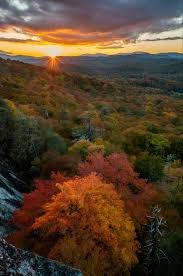 Most foliage destinations have two or three dominant tree species. New England is famous for red maple — vibrant, but relatively one-note. Asheville has something different: a temperate forest so botanically diverse that the southern Appalachians contain more native tree species than all of northern Europe combined. In practice, this means Asheville fall foliage produces a color palette that shifts, layers, and extends in ways other regions simply cannot.
The sequence matters. The foliage-viewing season begins at the end of September, when the leaves of dogwood, sourwood, and black gum trees turn deep red. These are the first movers — the early reds that signal the season’s arrival before most maples have changed at all. Sourwood is a regional specialty: a mid-sized understory tree found throughout the southern Appalachians that turns a vivid scarlet-red in September, earlier than almost anything else in the forest. Yellow poplars and hickories then burst into yellow and bronze. Maples bring the classic deep red in mid-October. Sassafras turns orange. Finally, in late October, oaks add brown and deeper reds that carry color into November.
The Biltmore Estate’s own horticultural team tracks this sequence annually. The estate’s dogwood and sourwood trees lining the estate roads give the first signal of fall in early October. Yellow poplars and sweet birches offer amber hues through mid-month. Sugar maples, red maples, hickory, and gum trees provide the peak show at the end of October. And a Japanese Katsura tree in the gardens — as its heart-shaped leaves turn buttery yellow — releases a scent described as cotton candy. That last detail is the kind of thing that makes Asheville fall foliage special: the experience engages every sense, not just sight.
Want private fall color beyond the Asheville crowds? Windows Over Waterfalls is 1 hour north — waterfalls, fire pits, and color from every window. Check Availability →
Missed peak color? Late fall and the holiday season are open, with the whole property to yourselves. Check open dates.
When Is Peak Asheville Fall Foliage?
The honest answer: it depends on where in Asheville’s elevation range you’re standing. The city and its surroundings span nearly 4,000 feet of elevation, which means “peak Asheville fall foliage” isn’t a date — it’s a progression.
Late September — First color at highest elevations: Dogwood, sourwood, and black gum begin turning on the ridges visible from downtown. Color is patchy but unmistakable. Graveyard Fields on the Blue Ridge Parkway (30 minutes south) often peaks the first week of October — the earliest high-profile spot in the Asheville area.
Early October — High Parkway corridor: The Blue Ridge Parkway from Craggy Gardens north of Asheville through the Mount Pisgah corridor south hits its mid-elevation peak. Color best above 4,000 feet. Downtown Asheville is still largely green — but the surrounding ridge is ablaze if you look up.
Mid-October (October 10–22) — The classic sweet spot: Most foliage guides target this period as “peak Asheville fall foliage” — and it is, for the mid-elevation range. The Blue Ridge Parkway is at or near its best across the NC section. Graveyard Fields is past peak but Black Balsam and the high balds are still vivid. Asheville neighborhoods are beginning to turn. This is also the most crowded period — Blue Ridge Parkway parking lots fill by 9am on weekends.
Late October (October 20–31) — Downtown Asheville and the Biltmore: The city at 2,134 feet reaches its own peak in the last two weeks of October. The French Broad River valley, the Biltmore Estate’s 8,000 acres, and the neighborhoods around downtown all show their best color. Crowds thin slightly compared to mid-month. The light in late October is different — lower sun angle, longer shadows, warmer tone — and many photographers prefer this period for exactly that reason.
Early November: The lower valleys hold on. The French Broad River corridor, including Hot Springs at 1,300 feet one hour north, holds color into early November — the city’s peak has passed, but the river valleys are still warm with color and almost completely free of crowds.
Best Asheville Fall Foliage Spots
 America’s largest private home, on 8,000 acres in the heart of Asheville, is the most iconic fall foliage experience in the city — and one of the most architecturally dramatic anywhere in the country. The estate roads lined with sourwood and dogwood trees give the first color of the season in early October; by late October the Bass Pond and formal gardens are edged in glowing beeches and the signature view of the chateau is wrapped in warm gold and red. The estate’s horticultural team plans fall floral displays that reach peak bloom mid-October, adding chrysanthemums and native wildflowers alongside the turning trees.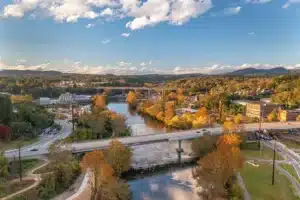
 The North Carolina Arboretum sits on 426 acres adjacent to Pisgah National Forest at the south end of Asheville — a curated 10-acre garden sanctuary showcasing native plants in their autumn glory, set within a larger forested property with trails winding through old-growth trees. The intimate garden setting allows visitors to appreciate the subtle variations in fall color up close — the difference between a red maple and a sourwood at 10 feet, rather than as a blur of color from a Parkway overlook. The Arboretum also makes the Forbes Four-Star Bonsai Exhibition Garden — which turns extraordinary colors in fall — accessible to the public. Smaller crowds than the Parkway, world-class plant collections, and immediate Pisgah National Forest access from the back trails.
 The Blue Ridge Parkway enters Asheville from the south at NC-191 and immediately begins climbing toward some of the best high-elevation fall foliage in the eastern US. Graveyard Fields at MP 418.8 — 30 minutes south — is consistently the first major stop to peak, typically the first week of October. Two waterfalls, a mile-high valley meadow, and wild blueberry fields turning red. Continue south to
 Asheville Fall Foliage Hikes
The hikes around Asheville in fall offer something the drives cannot: the ability to be inside the color rather than observing it from a distance. For the full guide to the best trails, see our Asheville NC hiking guide. The fall highlights:
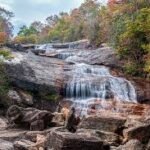
Graveyard Feels, Skinny Dip Falls
Graveyard Fields Loop (MP 418.8, 3.2 miles): The best fall waterfall hike from Asheville. Two waterfalls framed in red and gold, a mile-high meadow turning amber, wild blueberries underfoot. Peaks first week of October — often before crowds realize it. Arrive before 9am on fall weekends.
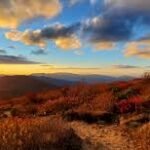
Black Balsam
Black Balsam to Tennent Mountain ridge walk: Nearly 3 miles of open bald walking above 6,000 feet with fall color in every direction below. Grass turns amber, forest goes crimson. The most sustained above-treeline fall color experience accessible from Asheville. Peak early October.
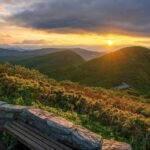
Craggy Gardens
Craggy Gardens Pinnacle Trail (MP 364.1, 1.4 miles): The closest high-elevation fall hike north of Asheville. The dense catawba rhododendron heath that blazes purple in June frames panoramic ridge views in full fall color in early-to-mid October. Short enough to combine with another stop.
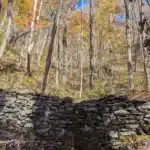
Rattlesnake Lodge
Rattlesnake Lodge Trail (near MP 374.4, 3.9 miles): The most historically interesting fall hike near Asheville. Stone ruins of a 1904 summer estate — lodge foundations, spring house, swimming pool, tennis courts — disappearing back into old-growth hardwood forest turning gold and crimson. Locals love it. Visitors mostly miss it.
What Makes October in Asheville Different From Any Other Month
Fall is the only season in Asheville when the city itself becomes the attraction rather than just the base. In summer, visitors use Asheville as a staging point for the mountains. In fall, the mountains come to Asheville — the color descending the ridges toward the valley floor while the city’s restaurants, breweries, and arts district peak simultaneously. The combination of world-class food, craft beer, live music, and the most dramatic natural color event of the year in one small mountain city is genuinely unusual.
The 3rd and 4th weeks of October have the most reliable color in the downtown Asheville area — the period when the valley floor at 2,134 feet finally catches up to the surrounding ridges. Explore Asheville’s weekly Fall Color Report is the best real-time resource for tracking the progression — updated by local photographers throughout the season.
Practical Tips for Asheville Fall Foliage
Before You Go — What Locals Know
Book months in advance: October is Asheville’s peak tourism month. Popular hotels, vacation rentals, and the Biltmore sell out sometimes by August for prime October weekends.
Weekdays are dramatically better: Saturdays in October on the Blue Ridge Parkway near Asheville are genuinely chaotic. The same overlook on a Tuesday morning is empty and extraordinary.
Downtown peaks later than the mountains: Visitors who come the first week of October for “peak color” and find downtown still green are early. The city at 2,134 feet peaks late October. Time your visit to match your priority — Parkway or downtown.
The Parkway has no street addresses: Use mileposts. Download the NPS Blue Ridge Parkway app before leaving cell service.
Check road conditions: The Blue Ridge Parkway can close sections for ice, fallen trees, or storm damage. Check nps.gov/blri before driving.
Hurricane Helene update: Asheville is fully open for fall 2026. The River Arts District has rebuilt with new energy. Chimney Rock State Park has reopened. Most Parkway sections near Asheville are accessible — confirm specific sections at nps.gov/blri.
Beyond Asheville — Where to Go When You Want to Escape the Crowds
Asheville draws enormous fall crowds — and for good reason. But the best Asheville fall foliage experiences are often found just outside the city, where the same color exists without the traffic.
One hour north via US-25/70, the Hot Springs corridor in Madison County delivers a fall experience that most Asheville visitors never find. Hot Springs sits at 1,300 feet in the French Broad River valley, surrounded by ridges that rise 3,000 feet above the town. By late October the town is completely wrapped in color — and 15 minutes up the mountain, Max Patch delivers the most open-sky fall panorama in the region. The 4,629-foot grassy bald turns amber in early October while the surrounding forest goes crimson and gold in every direction. No crowds approaching the Parkway. A view that rivals anything in the southern Appalachians. See our western NC fall foliage guide for the full picture beyond Asheville.
Where to Stay for Asheville Fall Foliage
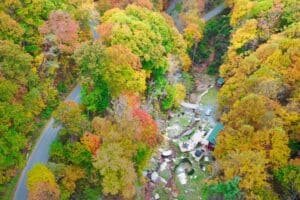 Asheville has hundreds of hotel rooms, vacation rentals, and B&Bs — but October is the hardest month to find availability at reasonable rates. Book early, book weekdays, and understand that proximity to the Parkway entry points matters more than proximity to downtown for foliage-focused trips.
For a completely different fall experience — private rather than crowded, mountain rather than city, waterfalls rather than overlooks — Windows Over Waterfalls is an hour north of Asheville in the mountains above Hot Springs. Four secluded acres with multiple waterfalls running the full length of the property. In October, the surrounding forest turns around the cabin while the creek runs cold below. A hot tub above the water. Two fire pits. Thirty-eight windows and skylights bringing the fall color inside from every angle. One booking at a time. No other guests. The whole property is yours. Book direct at windowsoverwaterfalls.com — no platform fees.
Airbnb designates this as a top 10% home — their designation, not ours · Guest Favorite · Superhost
What Airbnb Guests Are Saying
★ 4.97
254 Five-Star Reviews
Read the reviews there, then book direct here and skip Airbnb’s guest service fee.
As of October 2026 — and still growing.
Planning a Fall Wedding or Elopement Near Asheville?
The same property hosts private waterfall ceremonies through our sister site — all-inclusive elopement packages from $4,400 with photography, florals, officiant, hair & makeup, and more.