
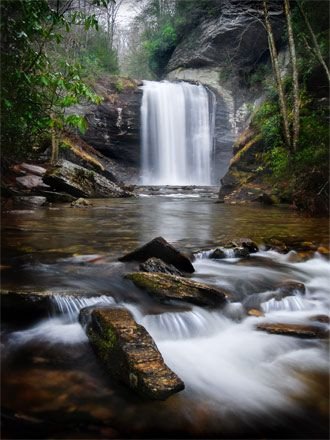
 Pisgah National Forest waterfalls are the defining natural feature of western North Carolina’s most celebrated outdoor corridor. Transylvania County — where the Pisgah Ranger District is centered — goes by an official nickname: the Land of Waterfalls. That designation isn’t marketing. The county contains over 250 named waterfalls within its borders, more than any comparable area in the eastern United States. The combination of the Blue Ridge Escarpment’s dramatic elevation drop, annual rainfall exceeding 80 inches in some areas, and the geological diversity of the southern Appalachians has created a concentration of waterfalls that draws visitors from across the country and beyond.
The majority of the most visited Pisgah National Forest waterfalls cluster along a 10-mile stretch of US-276 between Brevard and the Blue Ridge Parkway — the Forest Heritage Scenic Byway. Looking Glass Falls, Sliding Rock, Moore Cove Falls, and the Cradle of Forestry all sit within this corridor. But Pisgah extends far beyond US-276. The Appalachian Ranger District north along the Tennessee border holds Catawba Falls, Douglas Falls, and Walker Falls. The Grandfather District east of Asheville holds Linville Falls. The full picture of Pisgah National Forest waterfalls spans three districts and hundreds of miles.
Pisgah National Forest Waterfalls — At a Glance
Total named waterfalls in Transylvania County: 250+ — the Land of Waterfalls
Total waterfall trails in Pisgah National Forest: 172 (AllTrails count)
Forest size: 500,000+ acres · Three ranger districts
Most visited waterfall: Looking Glass Falls — 60 ft · Roadside · Free
Best family waterfall: Moore Cove Falls — 0.7 mi easy trail · Walk-behind
Best swimming waterfall: Sliding Rock — natural 60-ft water slide · Fee in season
Best waterfall hike: Twin Falls — two 100-ft falls · More challenging approach
Easiest access corridor: US-276 Forest Heritage Scenic Byway — multiple falls within 10 miles
Best base town: Brevard NC — 6 miles from Looking Glass Falls
From Asheville: ~36 miles via I-26 W and US-276 N · 45–50 minutes
Note on Skinny Dip Falls: Significantly altered by Tropical Storm Fred in 2021 — no longer the falls it once was
Understanding Pisgah National Forest — The Three Districts
Pisgah National Forest covers over 500,000 acres across western and north-central North Carolina, divided into three ranger districts with distinct characters and waterfall concentrations:
Pisgah Ranger District — South of Asheville, centered around Brevard and the US-276/Forest Heritage Scenic Byway corridor. This is where the highest concentration of Pisgah National Forest waterfalls sits, and what most visitors mean when they talk about “Pisgah.” Looking Glass Falls, Sliding Rock, Moore Cove Falls, Graveyard Fields, Twin Falls, Cedar Rock Falls, and dozens more are all in this district. The Davidson River runs through the district’s center, fed by countless tributary streams that cascade off the surrounding ridges.
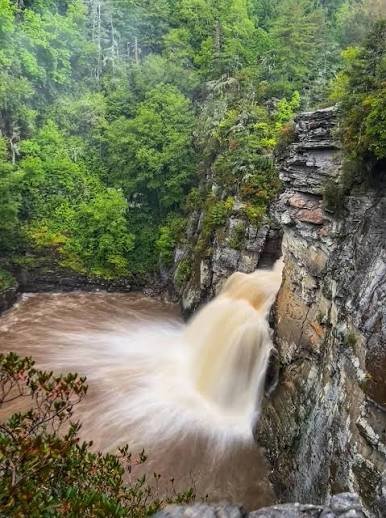
Grandfather Ranger District — East of Asheville, covering the Linville Gorge, Grandfather Mountain area, and the approach to the High Country. Linville Falls — one of the most photographed waterfalls in NC — anchors this district on the Blue Ridge Parkway. Catawba Falls near Old Fort is among the most visited trail-access waterfalls in the district. A different landscape than the Pisgah District — drier, more varied, with the dramatic granite gorge character of Linville Gorge dominating the southern end.
Appalachian Ranger District — North of Asheville along the Tennessee border, including the Laurel River corridor, the Hot Springs area, and the upper reaches toward Roan Mountain. Douglas Falls and Walker Falls are in this district. The Appalachian Trail runs through this district for miles, including the iconic Max Patch bald. This is the least-visited of the three districts for waterfalls — and consequently the quietest.
Exploring Pisgah National Forest? Windows Over Waterfalls is a private waterfall cabin in the Appalachian District — 1 hour from Brevard, with your own private waterfalls on 4 acres. Check Availability →
Best Pisgah National Forest Waterfalls — Pisgah District (US-276 Corridor)
The US-276 corridor between Brevard and the Blue Ridge Parkway is the most concentrated waterfall stretch in Pisgah National Forest — and arguably in the entire eastern United States. These are the highlights, organized by accessibility:
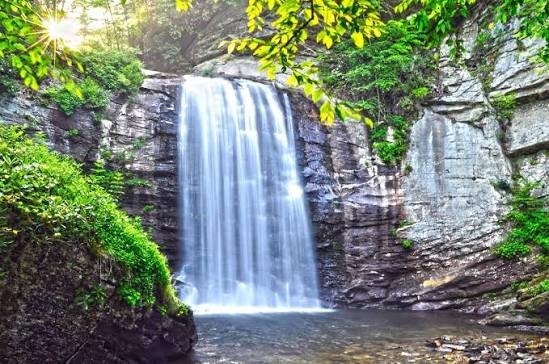
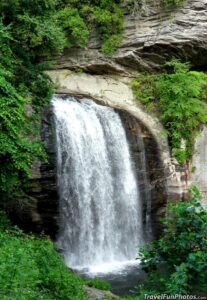
 The anchor of the Pisgah National Forest waterfall experience — and the most visited waterfall in North Carolina. A 60-foot curtain of water drops in a single plunge from a sandstone ledge into a wide, clear pool on Looking Glass Creek, visible directly from US-276. A paved staircase of about 30 steps leads to the base. Swimming is allowed in the plunge pool. In winter, the falls partially or fully freeze into dramatic ice columns. Free, always open, accessible to virtually everyone. For the complete visitor guide including directions, best times, and what’s nearby, see our
  Not a traditional waterfall — a 60-foot smooth granite slide on Looking Glass Creek that visitors have been sliding down into a deep pool for generations. The rock has a gentle slope with enough pitch to build speed; the pool at the base runs 6–8 feet deep. The water temperature holds near 55°F year-round regardless of air temperature — bracingly cold on the hottest summer days, and the primary attraction. Managed by Adventure Pisgah; a fee is charged Memorial Day through Labor Day when lifeguards are on duty. Off-season access is free but unguarded. The parking lot closes when it fills — arrive before 10am on summer weekends or be turned away. 1.5 miles north of Looking Glass Falls on US-276.
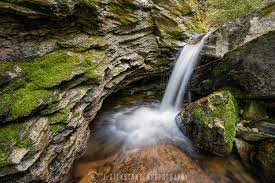
 The most underrated stop on the US-276 waterfall corridor — and one of the most rewarding easy hikes in Pisgah National Forest. Moore Cove Falls drops 50 feet over a wide sandstone overhang, creating a walk-behind experience where you can stand behind the falls on dry rock. The 0.7-mile round-trip trail from a small pullout on US-276 (about 0.5 miles north of Looking Glass Falls) is flat, easy, and family-friendly. Most visitors stop at Looking Glass Falls and continue north without pulling over for Moore Cove. That’s a mistake — it takes 30 minutes and is genuinely extraordinary. The overhang behind the falls stays mossy and damp year-round; the sound from inside is completely immersive.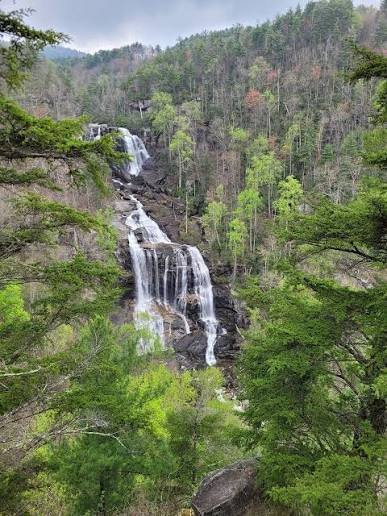
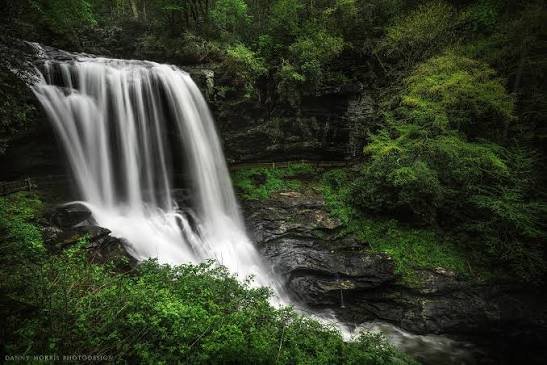
 A 20-foot cascade on Cedar Rock Creek, accessible via the Cat Gap Loop Trail from the Pisgah Center for Wildlife Education parking area off FR-475. The 1.8-mile round-trip hike is moderate with minimal elevation change — one of the better family-friendly waterfall hikes in the Pisgah District that most visitors overlook entirely. The trail passes through dense hardwood forest and rhododendron before reaching the falls, which flow into a series of cascades and pools downstream. Morning light is the best for photography — the sun drops behind the falls by afternoon. Nearby Cedar Rock Mountain looms above, and the same trail network connects to John Rock, another excellent summit hike with Looking Glass Rock views.
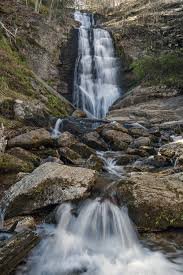 One of the tallest and most undervisited waterfalls in the Pisgah District — a 150-foot cascade known by three names (Daniel Ridge Falls, Toms Spring Falls, and Jackson Falls) that tumbles down a rocky face into a forested pool just 0.5 miles from the trailhead on Daniel Ridge Trail. The trailhead sits off FR-475, about 3.9 miles past the Pisgah Center for Wildlife Education — the last half mile is unpaved gravel. Because the approach requires a bit more driving than the US-276 corridor falls, Daniel Ridge sees a fraction of the crowds. The complete Daniel Ridge Loop is 4.7 miles with 816 feet of elevation gain — a solid half-day hike with multiple cascades along the way. Note: flow is minimal during summer dry spells; most impressive after rain or in spring.
 Not technically in Pisgah National Forest — DuPont State Recreational Forest is a separate 10,400-acre state forest adjacent to Pisgah near Brevard — but Triple Falls belongs in any conversation about Pisgah area waterfalls. A 125-foot three-tiered waterfall on the Little River, with three distinct cascade types dropping at different angles. Most recognizable as the filming location for The Hunger Games (2012): the scene where Katniss finds the injured and camouflaged Peeta was filmed at the base of Triple Falls. The same forest was used for key scenes in The Last of the Mohicans (1992). The most popular hiking route visits Triple Falls, High Falls (150 ft — tallest in DuPont), and Hooker Falls in a single 2.2-mile loop from the Hooker Falls parking area. Free to enter. About 20–30 minutes southeast of Brevard.
 The tallest waterfall in DuPont State Forest — a powerful 150-foot single-drop cascade on the Little River, half a mile upstream from Triple Falls on the same trail. A wooden covered bridge above the falls is one of the most photographed structures in DuPont, and an overlook on the main trail provides a clear view of the full drop. A spur trail descends to the base for the closest perspective. High Falls runs year-round with substantial volume; the drop is wide enough to produce significant mist at the base in higher water conditions. Most visitors combine High Falls and Triple Falls in the same 2.2-mile loop from the Hooker Falls parking area — one of the most waterfall-efficient hikes in western NC.
 Like DuPont, Turtleback Falls is not in Pisgah National Forest — it’s in Gorges State Park near Lake Toxaway, about 30 minutes south of Brevard. But no guide to waterfalls near Pisgah would be complete without it. Turtleback Falls gets its name from the smooth, curved rock face over which the water flows — a natural water slide that deposits swimmers into a deep pool below. It’s the most popular natural swimming waterfall in the Brevard area, drawing enormous crowds on hot summer weekends. The hike from the Frozen Creek parking area is about 1.5 miles round-trip. The pool at the base is deep and cold year-round. Note: the rock face is slippery and the current below the slide is strong — use caution and follow posted rules. Free to enter Gorges State Park.
Best Pisgah National Forest Waterfalls — Grandfather District
Pisgah National Forest Waterfalls — Appalachian District
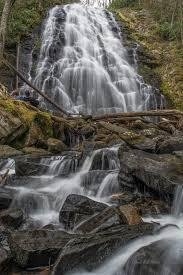
 The Appalachian Ranger District runs along the Tennessee border north of Asheville — the least visited and most remote of the three Pisgah districts for waterfall seekers. Hot Springs, Marshall, and the upper French Broad River corridor are the primary access towns. The AT runs through this district for miles, including the Max Patch bald. Waterfall highlights include Douglas Falls and Walker Falls, both less frequently visited than their Pisgah District counterparts.
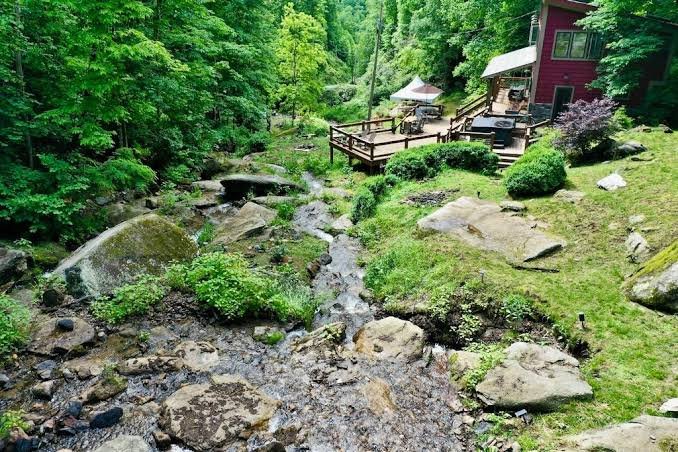
Windows Over Waterfalls sits in the Appalachian District — a private waterfall cabin on 4 acres above Hot Springs with multiple waterfalls running the full length of the property. This is the most personal version of a Pisgah National Forest waterfall experience available: not a trailhead, not a day trip, but waterfalls running outside your window through every season and every night. For everything to do in the surrounding Hot Springs area, see our Hot Springs NC guide.
DuPont State Recreational Forest — Not Pisgah, But Adjacent
A common point of confusion: DuPont State Recreational Forest is not part of Pisgah National Forest, but it sits immediately adjacent and is often discussed alongside Pisgah National Forest waterfalls. The 10,400-acre state forest between Hendersonville and Brevard contains some of the most spectacular and most photographed waterfalls in western NC — Triple Falls, High Falls, Hooker Falls, and Bridal Veil Falls. Triple Falls and the surrounding forest appeared in The Hunger Games (2012) and The Last of the Mohicans (1992). If you’re visiting the Pisgah District for waterfalls, DuPont is worth adding to the itinerary — it’s 20–30 minutes from Brevard and completely free to enter.
Planning Your Pisgah National Forest Waterfall Visit
Practical Tips
Cell service: Spotty throughout Pisgah National Forest. Download offline maps before entering the forest. AllTrails and Gaia GPS both work offline.
Best base: Brevard NC — a genuine small mountain arts town with good restaurants, a music scene, and immediate forest access. 6 miles from Looking Glass Falls.
Best season for waterfalls: Spring (March–May) for highest water volume. Fall (October) for color framing the falls. Winter for ice formations at Looking Glass Falls, Twin Falls, and Sliding Rock.
Parking fills early: Looking Glass Falls and Sliding Rock both fill by mid-morning on summer and fall weekends. Arrive before 9am or expect a wait or turnaway.
US-276 is the organizing spine: Drive this road from Brevard north toward the Blue Ridge Parkway and you’ll pass Looking Glass Falls, Moore Cove Falls, Sliding Rock, the Cradle of Forestry, and Pink Beds within 10 miles.
Dogs: Allowed on leash throughout most of Pisgah National Forest. Sliding Rock is an exception in season — check current rules.
Hurricane Helene note: Most Pisgah trails and roads have reopened, but a few still close for Helene repairs (last checked Oct 2026). Check fs.usda.gov/nfsnc for current trail conditions before visiting.
Where to Stay for Pisgah National Forest Waterfalls
Brevard is the natural base for the Pisgah District waterfall corridor — within 6 miles of Looking Glass Falls and immediately adjacent to both Pisgah National Forest and DuPont State Forest. Davidson River Campground sits within Pisgah National Forest itself, just off US-276. Asheville is 36 miles north with far more lodging variety.
Planning to hit more than one of these falls in a single trip? See our North Carolina waterfall road trip guide for stop-by-stop routing.
For the Appalachian District and a completely different kind of waterfall stay, Windows Over Waterfalls is a private cabin on 4 secluded acres in the mountains above Hot Springs — an hour from Brevard and the Pisgah District, but with multiple private waterfalls running the full length of the property. A hot tub above the creek. Two fire pits. Thirty-eight windows and skylights. The sound of falling water through every night. One booking at a time. No other guests. The whole property is yours. Book direct at windowsoverwaterfalls.com — no platform fees.
Airbnb designates this as a top 10% home — their designation, not ours · Guest Favorite · Superhost
What Airbnb Guests Are Saying
★ 4.97
254 Five-Star Reviews
Read the reviews there, then book direct here and skip Airbnb’s guest service fee.
As of October 2026 — and still growing.
Planning a Wedding or Elopement Near Pisgah National Forest?
The same property hosts private waterfall ceremonies through our sister site — all-inclusive elopement packages from $4,400 with photography, florals, officiant, hair & makeup, and more.