
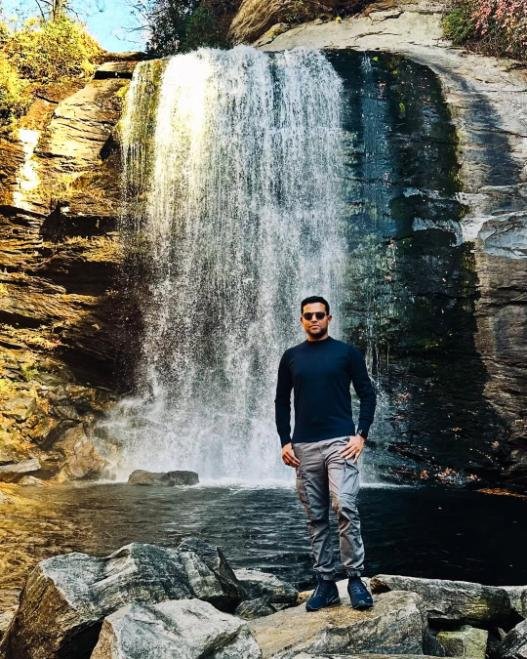
North Carolina has more waterfalls than any other state east of the Rockies — and the best waterfalls in NC — over 1,000 by most counts, spread across national forests, state parks, river gorges, and tucked into hollows that haven’t changed since the Cherokee first walked these ridges. One county alone, Transylvania County near Brevard, claims over 250 named waterfalls within its borders. The reason isn’t mystery — it’s geology and meteorology working in concert: the Blue Ridge Escarpment creates dramatic elevation drops of nearly 5,000 feet within short horizontal distances, and moist air pushing north from the Gulf collides with those ridges, releasing some of the heaviest annual rainfall in the eastern United States. Water falls here because the mountains give it nowhere else to go.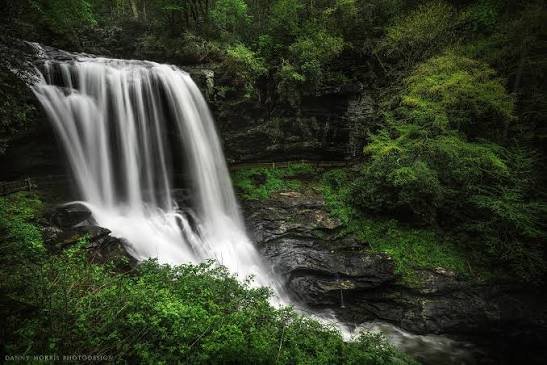
What follows is a guide to the best waterfalls in NC — organized not just by name and height, but by what kind of experience you’re actually looking for. Some you can see from your car window. Some require a full day of hiking into wilderness. Some were used as backdrops in Hollywood films. Some have 5,000-year-old Cherokee history wrapped around them. A few you can stand behind, swim beneath, or watch freeze solid in January. North Carolina’s waterfalls are not interchangeable — and this guide treats them that way.
North Carolina Waterfalls — At a Glance
Total waterfalls statewide: 1,000+ (most east of the Rockies)
Transylvania County alone: 250+ named waterfalls — nicknamed “The Land of Waterfalls”
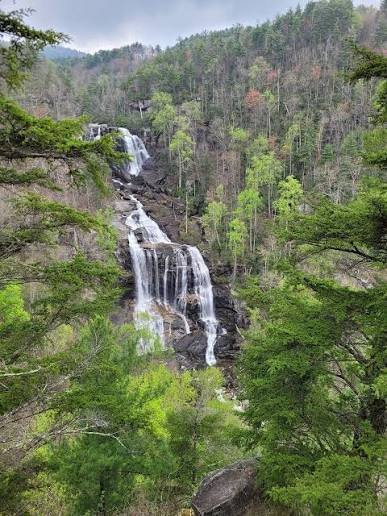
Tallest waterfall in NC: Upper Whitewater Falls — 411 ft (tallest east of the Rockies per U.S. Forest Service)
Most visited: Looking Glass Falls, Pisgah National Forest near Brevard
Most famous film appearance: Hickory Nut Falls — The Last of the Mohicans (1992)
Hollywood film county: Transylvania County — The Hunger Games, The Last of the Mohicans
Best season: Spring (highest flow) and Fall (foliage framing)
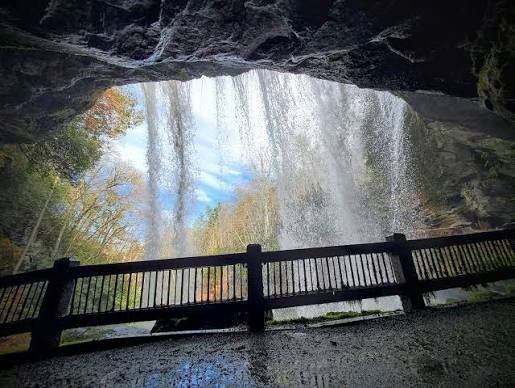
Drive-up accessible: Looking Glass Falls, Dry Falls, Bridal Veil Falls, Glassmine Falls
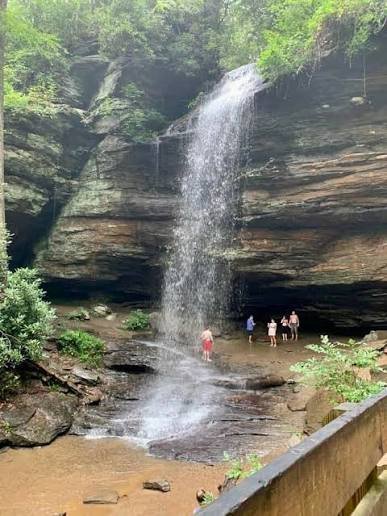
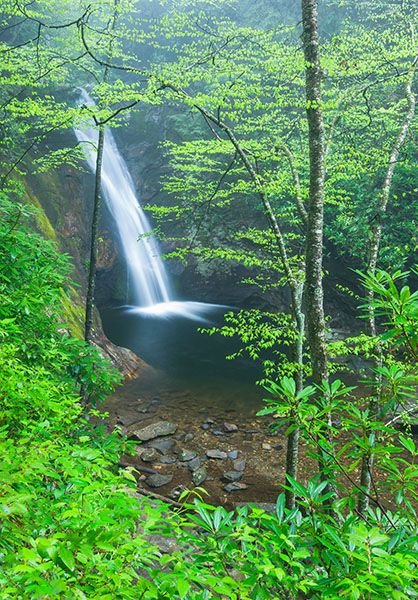
Best for swimming: Hooker Falls, Silver Run Falls, Courthouse Falls
Private waterfall experience: Windows Over Waterfalls — 20 min from Hot Springs NC
Why North Carolina Has So Many Waterfalls
Before diving into the list, it’s worth understanding why North Carolina is so extraordinary in the first place — because the answer makes every waterfall you visit more interesting.
The Appalachian Mountains in western North Carolina are among the oldest on earth — far older than the Rockies or the Alps, worn down over hundreds of millions of years from peaks that once rivaled the Himalayas. The Blue Ridge Escarpment, the sharp geological drop between the mountain plateau and the Piedmont, creates some of the most abrupt elevation changes in the eastern United States. Transylvania County alone drops nearly 5,000 feet in elevation from its highest point to its lowest within county lines. Water cascades down that topography with tremendous force.
The rainfall story makes it even more dramatic. Transylvania’s mountains are the first serious obstacle that northbound low-pressure weather fronts from the Gulf of Mexico and Caribbean-area Atlantic hit up against, causing moist air to rise, cool, and release precipitation to an extent that gives the area one of the heaviest rainfalls in the eastern United States. Transylvania County receives over 90 inches of rain annually due to orographic lift, making it the state’s wettest county.
The Cherokee understood this land long before European settlers arrived. They moved through these mountain corridors for thousands of years, leaving petroglyphs at sites like Paint Rock near Hot Springs and regarding the mineral springs and cascading waters as sacred. The waterfalls weren’t tourist attractions — they were part of a living landscape with deep spiritual significance. That history is still present if you know where to look.
Exploring western NC waterfalls? Windows Over Waterfalls puts private cascades right outside your door. Check Availability →
The Best Waterfalls in NC — Drive-Up & Easy Access
Not every great waterfall requires a serious hike. Several of North Carolina’s most spectacular falls are accessible to virtually anyone, including families with young children and visitors with mobility considerations. These are the ones worth putting at the top of your list if you want maximum impact with minimal exertion.
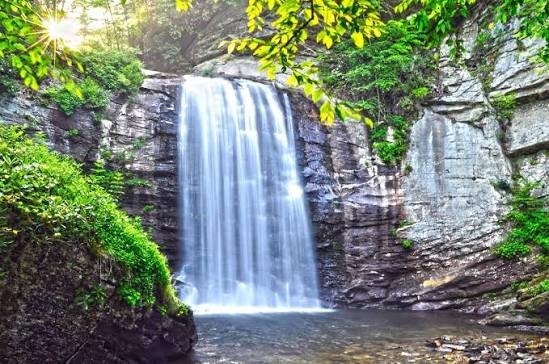
The Best Waterfalls in NC — Hiking Required
The waterfall experiences that stay with people longest are usually the ones you had to earn. These falls require real trail time — anywhere from a short moderate hike to a full-day backcountry effort. The reward scales accordingly.
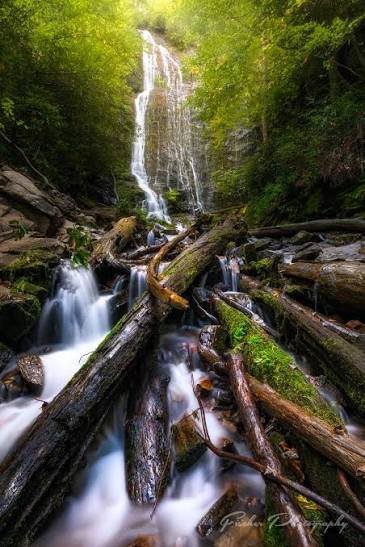
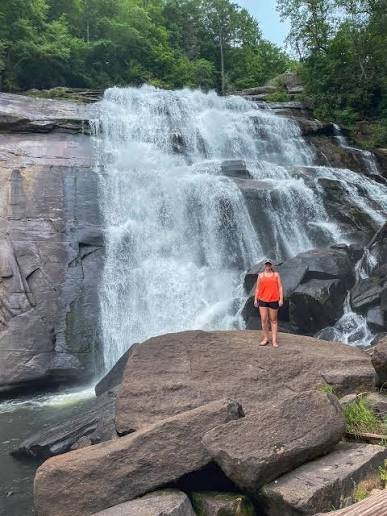
The Tallest Waterfall East of the Rockies
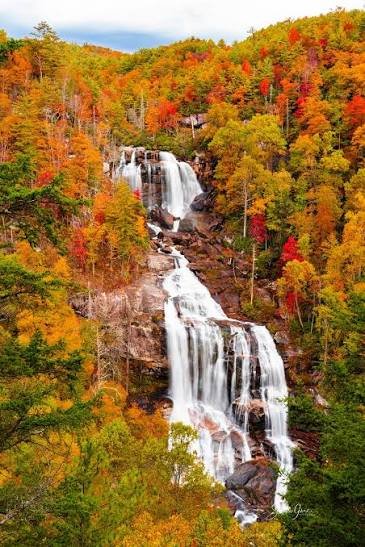
The Waterfall That Stole Hollywood
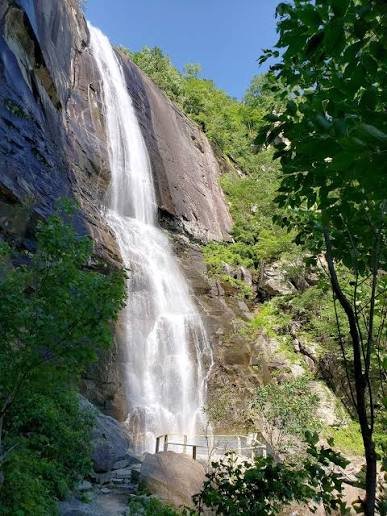
Staying the night? Windows Over Waterfalls is 25 minutes up the mountain from Hot Springs — private waterfalls outside your door. Book Direct →
Hidden & Underrated: Waterfalls Worth Seeking Out
The famous falls draw the crowds. These ones reward the curious — equally spectacular, far less visited, and often more intimate in scale. Each belongs on any complete tour of the best waterfalls in NC.
North Carolina’s Most Dramatic Waterfall Region: The Blue Ridge Parkway Corridor
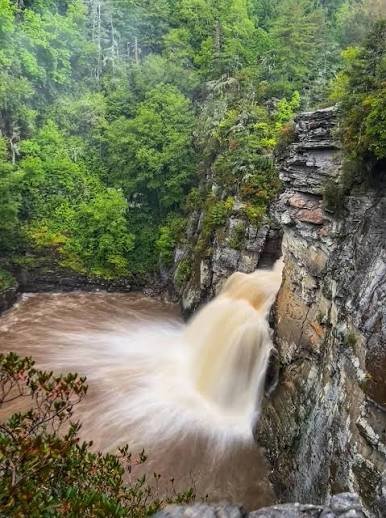
The Blue Ridge Parkway runs 469 miles through North Carolina and Virginia, and while the views from the road alone justify the drive, the waterfall access points along its NC stretch are among the best in the state. Linville Falls at MP 316.4 is the signature stop, but several others reward the patient explorer:
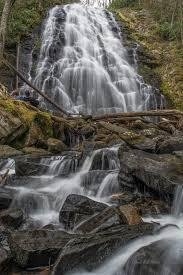
Crabtree Falls (MP 339.5, Yancey County) — A 70-foot horsetail fall accessible via a moderate 2.5-mile loop. The spring wildflower display on the approach trail is one of the best on the entire Parkway. Named differently from Virginia’s Crabtree Falls — NC’s version is gentler, more accessible, and significantly less crowded.
Glassmine Falls (MP 361.2, Buncombe County) — An ephemeral giant. When it flows after heavy rain, Glassmine Falls slides down the rock face of Blackstock Knob Mountain over an estimated 800+ feet to the North Fork Swannanoa River below — potentially the longest continuous cascade in the eastern United States, though its intermittent nature keeps it out of most official rankings. Visible from the Parkway overlook without leaving your car.
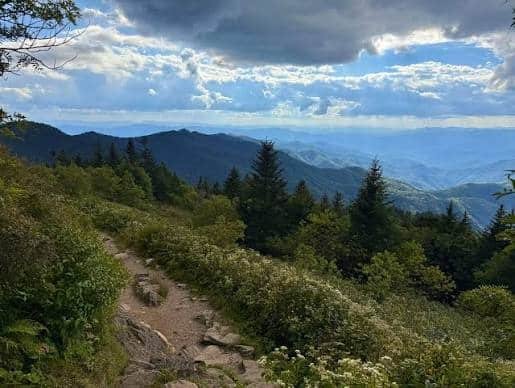
Waterrock Knob (MP 451.2) — Not a waterfall, but worth mentioning here: at 6,292 feet, the overlook at Waterrock Knob is one of the highest automobile-accessible points on the Parkway and offers sunrise views that rival anything in the Appalachians. The waterfalls in the valleys below look like threads of white from this elevation.
When You’re in the Hot Springs Area: Waterfalls & an Unexpected Summit
The Hot Springs corridor in Madison County is not famous for waterfalls the way Transylvania County is — but the private waterfall experiences here are among the most intimate in the state, and the region has one natural feature that rivals any waterfall in the Southeast for sheer visual impact.
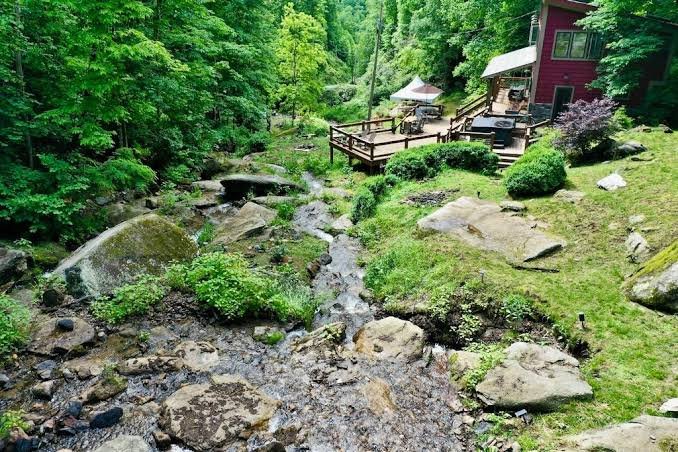
Private waterfall experiences near Hot Springs — The mountain hollows around Hot Springs run with creek water year-round, and several private properties give guests exclusive access to cascading falls with no other visitors. Windows Over Waterfalls is the best known of these — a private cabin on 4 acres where multiple waterfalls run the full length of the property, audible from every room, with moss-covered trails and creek-side benches at each cascade. One booking at a time. No shared spaces. The whole property is yours.
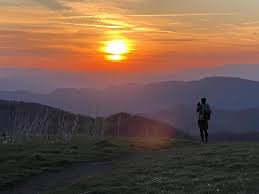
Max Patch — 15 minutes from Hot Springs — Not a waterfall, but worth knowing about if you’re in this corner of NC. Max Patch is a 4,629-foot grassy bald summit on the Appalachian Trail, 15 minutes from Hot Springs, with 360-degree panoramic views spanning the Smokies, the Black Mountains, and the Bald Mountains in every direction. On a clear day the view is genuinely staggering — the kind of landscape that makes people stop mid-trail and go quiet. If waterfall chasing brought you to western NC and you have an extra two hours, the Max Patch loop trail is a mile-plus of open ridge walking that is unlike anything else in the southern Appalachians. See our Hot Springs guide for directions and what to expect.
Best Practices for Waterfall Chasing in NC
Before You Go — What Experienced Waterfall Hikers Know
Best season for flow: Spring (March–May) — snowmelt plus peak rainfall means maximum volume
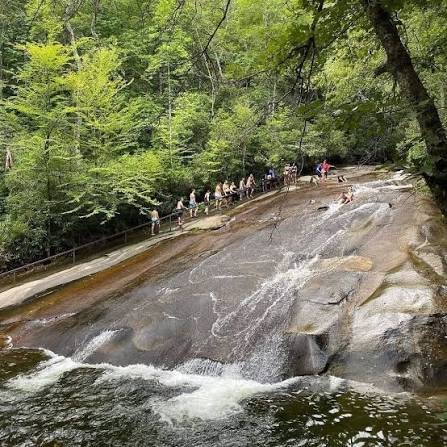
Best season for crowds: Weekday mornings, any season. Summer weekends at Looking Glass and Sliding Rock are genuinely packed.
Best season for photography: Fall (mid-October) — foliage framing and softer afternoon light
Winter: Underrated. Several falls (Looking Glass, Linville) partially or fully freeze — dramatic and nearly crowd-free
Footwear: Trail shoes with grip, always. Waterfall rocks are slippery even when they look dry
What kills people here: Going off-trail above falls, climbing on rocks in the spray zone, underestimating currents in plunge pools. Stay on marked trails. Every year, people die at NC waterfalls who thought the rules didn’t apply to them.
Dogs: Allowed on most Pisgah and DuPont trails on leash. Not permitted inside Great Smoky Mountains National Park on most trails. Always verify before going.
Parking fees: Some National Forest sites charge $3–$5 per vehicle. Have cash or a credit card ready.
Offline maps: Download AllTrails routes before leaving cell service. Connectivity is unreliable throughout western NC’s mountain corridors.
How to Plan a NC Waterfall Road Trip
The best waterfalls in NC cluster tightly in western NC — most within a few hours of each other — making a dedicated waterfall road trip genuinely feasible. Here’s a logical routing: For the complete route breakdown with driving distances and stop-by-stop details, see our North Carolina waterfall road trip guide.
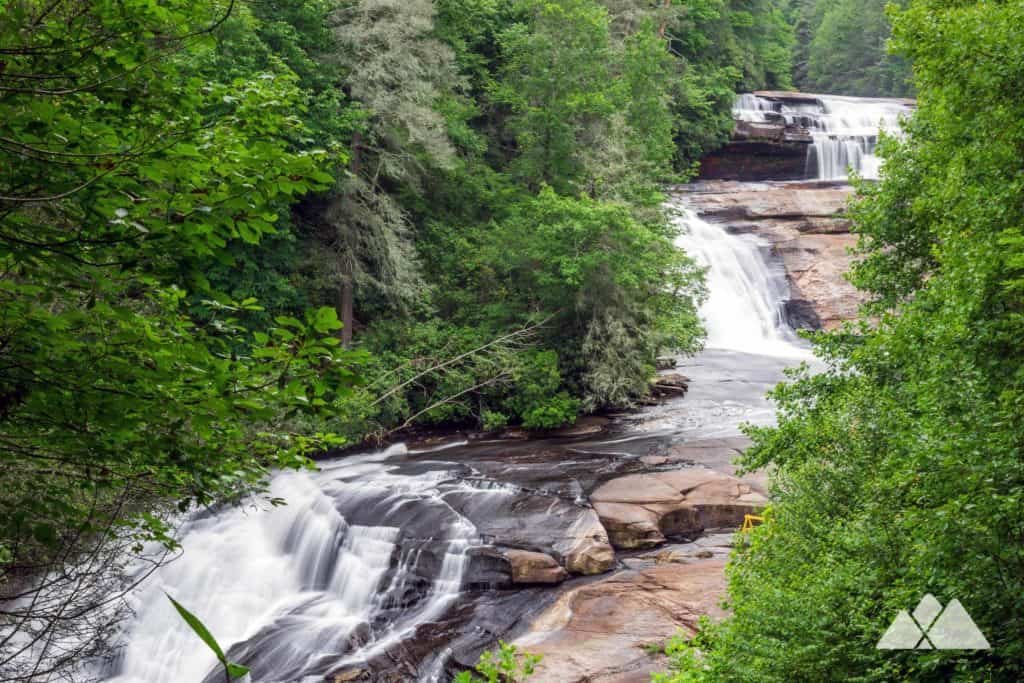
Day 1 — Pisgah National Forest / Brevard: Base in or near Brevard. Morning: Looking Glass Falls and Sliding Rock (US-276 corridor). Afternoon: Moore Cove Falls on the way back, then Triple Falls and Hooker Falls in DuPont State Forest. Full day, light hiking, maximum waterfall density. For a full breakdown of the Pisgah corridor, see our NC waterfall road trip guide.
Day 2 — Highlands / Cashiers corridor: Drive US-64 east from Brevard toward Highlands. Dry Falls (walk behind it). Bridal Veil Falls (drive through it). Continue to Upper Whitewater Falls for the 411-foot main event. Afternoon option: Rainbow Falls in Gorges State Park if energy holds.
Day 3 — Blue Ridge Parkway / Hot Springs: Drive north on the Parkway. Stop at Linville Falls (MP 316.4). Continue north toward Hot Springs for an overnight at Windows Over Waterfalls — private cascades on the property, 15 minutes from Max Patch, 25 minutes from the Hot Springs mineral springs.
Where to Stay for a NC Waterfall Trip
The triangle of Brevard, Asheville, and Hot Springs covers the majority of the best waterfalls in NC. Brevard is the natural base for Pisgah and DuPont. Asheville is the larger hub with the most lodging options and restaurant access. And for the northern reaches — the Linville Falls corridor, the Pisgah backcountry, and the Madison County hollows — Hot Springs and the surrounding mountains put you closest to the quieter, less-visited falls while offering something no Brevard or Asheville hotel can: private waterfalls on your own property.
For full waterfall immersion, Windows Over Waterfalls is a private 4-acre cabin in Hot Springs, NC — 25 minutes up the mountain from town, 15 minutes from Max Patch, and surrounded by multiple waterfalls that run the full length of the property. 38 windows and skylights, a hot tub above the creek, two fire pits, and the sound of cascading water through every night. One booking at a time. No platform fees when you book direct.
Airbnb designates this as a top 10% home — their designation, not ours · Guest Favorite · Superhost
What Airbnb Guests Are Saying
★ 4.97
254 Five-Star Reviews
Read the reviews there, then book direct here and skip Airbnb’s guest service fee.
As of October 2026 — and still growing.
Planning a Wedding or Elopement Near NC’s Waterfalls?
The same property hosts private waterfall ceremonies through our sister site — all-inclusive packages from $4,400 with photography, florals, officiant, and more.



One Comment