
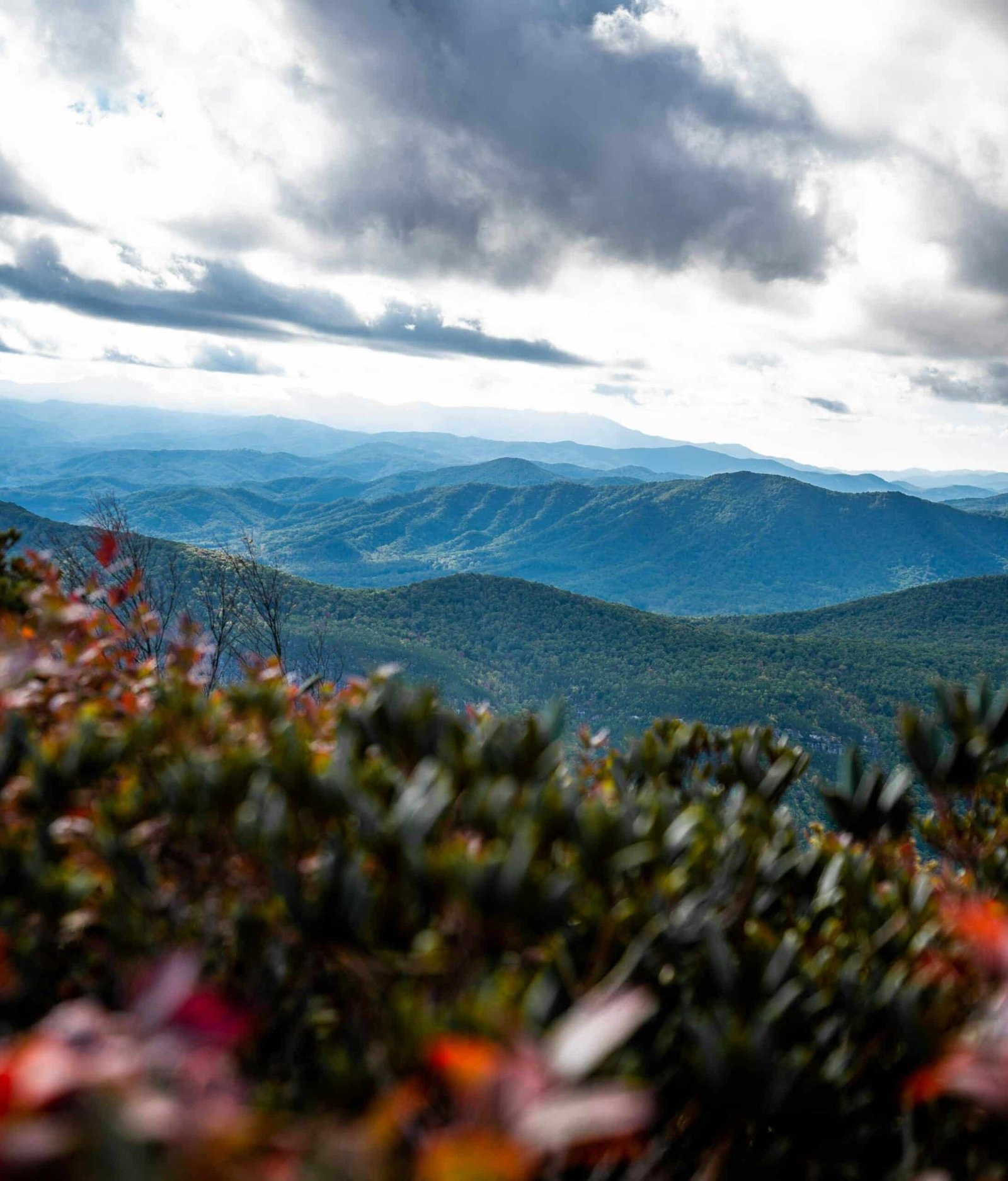
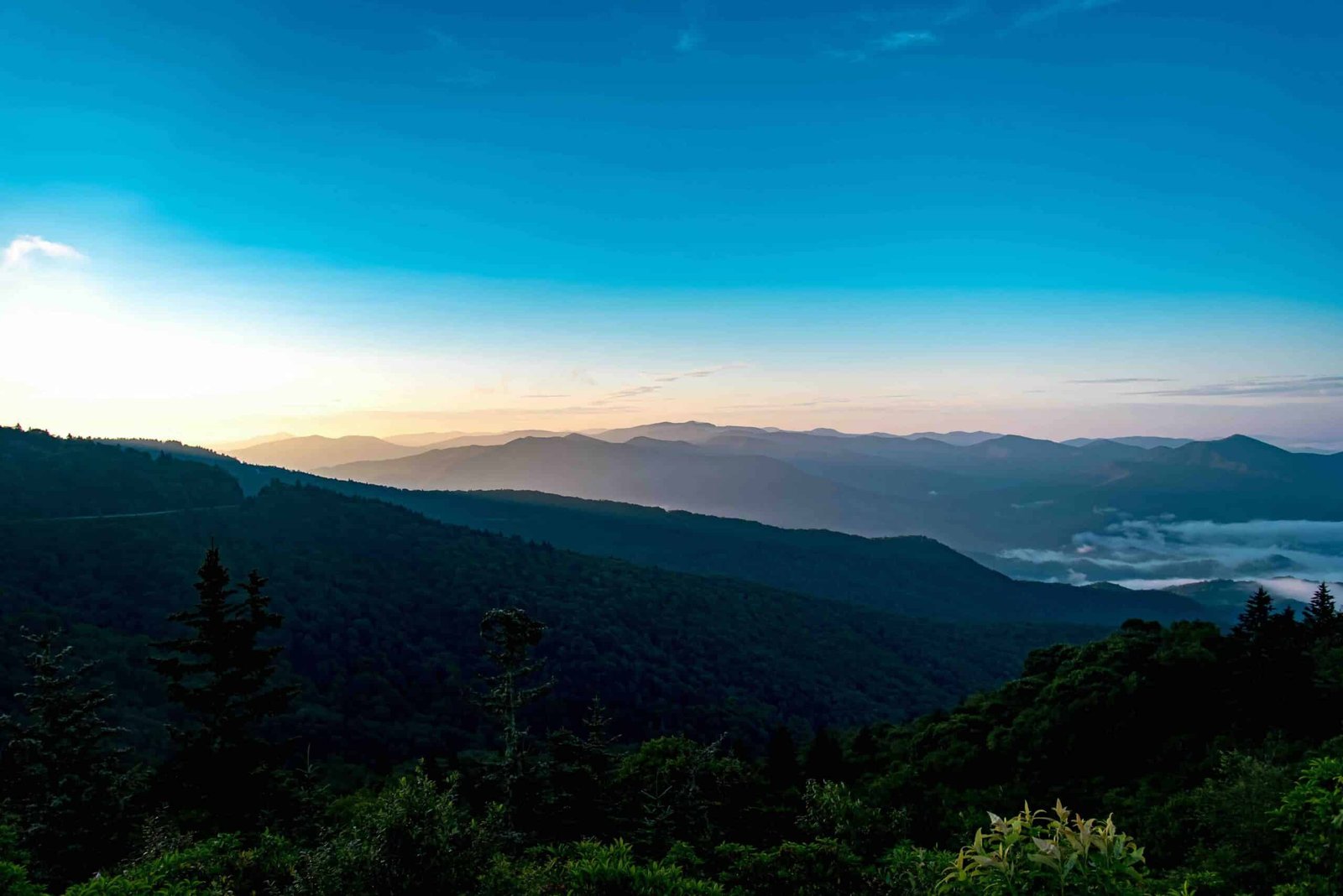
 Most people asking about the best time to visit Blue Ridge Mountains have already decided they’re going — they just want someone to tell them they picked the right season. Here’s the honest answer: they probably did. The Blue Ridge delivers something real in every season. Fall gets the most press, and the foliage earns every word of it. But summer in the mountains is the opposite of summer in the city in ways that matter. Spring runs quieter than it should, given how good it is. And winter has a case that most people never hear because they’ve already stopped reading. Here’s what each season actually delivers — and what the best time to visit Blue Ridge Mountains looks like for your kind of trip.
Fall: the best time to visit Blue Ridge Mountains for foliage
 Fall is the headline season in the Blue Ridge, and it earns it. The color change runs from the higher elevations down through mid-to-late October, with peak color in Western North Carolina typically landing mid-October. The Blue Ridge Parkway draws its biggest crowds of the year — not gridlocked, but slow, with parking spots at overlooks filling early. The payoff is real: the color at elevation is dramatic in a way that photographs don’t fully capture.
The case for staying put during fall foliage is strong. A private waterfall property gives you color in every direction without the parking situation, the crowds, or the drive. The creek runs orange and gold, the boulders sit in the middle of it, and the whole thing happens at your own pace. The full argument is in our guide to fall foliage in the Blue Ridge Mountains.
Summer: the best time to visit for heat escape
Summer in Atlanta doesn’t really cool down at night. The temperature drops maybe ten degrees and the humidity stays. You go inside, you run the AC, and you do it again tomorrow. That’s not a complaint — it’s just the reality of a Southern summer, and it’s exactly why the Blue Ridge Mountains hit differently in July and August.
The mountains run 10-15°F cooler during the day. At night, the difference is starker — while Atlanta is still sitting at 78°F at midnight, the Blue Ridge drops into the low 60s. You sleep with the windows open. You need a layer on the porch. The fire pit in July isn’t ironic — it’s actually necessary, and it’s one of the better surprises of a summer mountain trip for anyone coming from the flatland heat.
The waterfalls run strong in summer. The creek is cold enough to actually cool you down. The forest is fully green and the trails are lush. The hot tub is a different experience when the air around it is cool rather than the same temperature as the water. For couples who haven’t slept with the windows open since spring, a summer mountain weekend is a specific kind of relief that’s hard to replicate anywhere closer to home. The full case is in our guide to summer cabin getaways in the Blue Ridge Mountains.
Spring: the quietest and most underestimated season
Spring comes slowly to the Blue Ridge. March still has an edge to it. By April the waterfalls are running at their strongest — snowmelt from the higher elevations pushes the creek systems up, and the sound of moving water is louder than any other time of year. The wildflowers peak mid-April to early May. The crowds are a fraction of fall.
For couples looking for genuine quiet, spring is often the best time to visit Blue Ridge Mountains. The property is private year-round, but in spring the whole region has a hushed, unhurried quality that fall — for all its beauty — can’t quite match. Fewer people made the trip, which means the ones who did chose it deliberately.
Winter: the case for the off-season
 Winter in the Blue Ridge runs mild by mountain standards — temperatures in the 30s and 40s, occasional snow at higher elevations, rarely the kind of cold that shuts things down. The deciduous trees drop their leaves and the structure of the mountains becomes visible in a way that’s obscured the rest of the year. The waterfalls don’t freeze. The hot tub is at its best.
The honest case for winter: the rates are lower, the region is quieter, and a private waterfall property in winter has a particular stillness that the other seasons don’t. The fire pits get used more. The kitchen becomes the center of the trip in a way that feels intentional rather than forced. It’s not for everyone, but the people who love it tend to come back for it specifically.
The EV angle: planning your drive by season
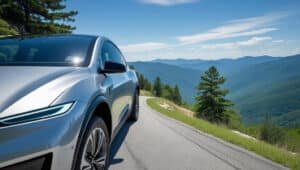 One practical note for couples driving from Atlanta, Charlotte, or Nashville — the Blue Ridge Parkway is a beautiful road in every season, but the approach and experience change. Fall brings the most traffic and the most spectacular color. Summer offers the clearest air and longest days. Spring runs quieter with the strongest waterfall flow. Winter occasionally closes sections at elevation but the valley approach on US-23 stays open. If you’re planning an EV road trip, charging infrastructure along I-26 and I-40 makes the drive straightforward in any season. The full guide to the route is in our EV road trip Blue Ridge Mountains guide.
The best time to visit Blue Ridge Mountains for a romantic trip
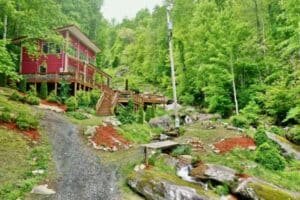 The honest answer: any season works for a romantic trip if the property is right. Fall is the most visually dramatic. Summer is the most comfortable for spending time outside. Spring is the quietest. Winter is the most intimate. What matters more than the season is the setup — a private property with its own water, its own trails, its own fire pits, and no shared spaces. A hot tub that faces the creek. A kitchen where cooking together is part of the trip. A place where there’s no reason to leave. Anniversary trips in particular benefit from the off-peak seasons — fewer people, lower rates, and a quality of quiet that peak season can’t offer. The full guide is in our piece on anniversary trips in the Blue Ridge Mountains.
Where to stay
Windows Over Waterfalls in Hot Springs, NC is a private waterfall property that works in every season. Multiple private waterfalls and a full creek system on the property — running strong in spring, cold and clear in summer, orange-gold in fall, still and quiet in winter. A deluxe hot tub with real jets facing the water. Three fire pits, lit trails from the back door, 38 windows and skylights, a fully stocked kitchen, and complimentary coffee. Free Level 2 EV charging. Dog friendly with a one-time $75 fee, no breed or weight restrictions. One hour from Asheville, 20-25 minutes from Hot Springs. The creek and waterfalls are audible from every room.
The Blue Ridge Parkway runs nearby — one of the most scenic drives in the country in any season. Hot Springs sits on the Appalachian Trail with natural hot spring soaking pools, a brewery, and good restaurants. Whatever season brings you east, the best time to visit Blue Ridge Mountains is the one that matches what you actually want from a trip.
Windows Over Waterfalls, Hot Springs NC